Friday, January 1, 2016

Treadmill Trade Up?

True Story!
Right, its time for your run but peeking outside the window you see raindrops the size of quarters hammering against the pavement and crack of thunder rolling in the distance threatening more than just a quick rain shower. Here enters the star of the show, the 'session saver': the treadmill. Now, I’m not a huge fan of the dreadmill ‘ahem’, treadmill’, as time seems to reduce to a sickeningly slow pace whenever I step on it. However, it is an excellent training tool when the outside elements prevent running outside or its not actually an option and, although it pains me to say, I have completed some of my best mind-testing training sessions on one.

So what is the low down on the treadmill vs. the great outdoors...?
1.  Beginner Confidence. A lot of my clients like to get used to the feeling of running on the machine in a completely controlled environment before attempting to take that first tentative Nike-clad step outside. It gives them a chance to work through the various speeds on the machine or try some hills, giving them the option to stop if needed, and not have to walk home or even pause the treadmill to use the bathroom. (Now, many runners, myself included, don’t see this as a huge problem. There’s nothing that large hedgerow or tree can’t hide when you’re caught short mid-run. However, the thought of baring more skin than necessary, you know, it’s a little off-putting for people new to the sport!)

A treadmill is not an absolute necessity for people new to running and that is what is great about the sport. All you really need is a pair of running shoes; some high visibility clothing and you are away! Roads and pavements are fairly predictable surfaces so sticking to this kind of area is a great idea for new runners. Be mindful that, if you do run on the road, it is best to run against the traffic – this ensures you can spot any approaching vehicles even if they don’t see you. (also, to make that dive, head first into the hedge if needed) It is important swap sides depending on your sightline and keep yourself positioned so you can see approaching cars, especially on blind bends.


Run facing oncoming traffic. That way, you're ready
to dive for safety should a driver not spot you!
2.  Injury Rehab. Some clients come in with chronic pain in hip or knee and the treadmill allows me to analyze their gait and stride in more detail. I can get them to warm up and video them from a convenient distance from behind from the side of the machine, without them having to run back and forth along a street or track. The analysis is therefore much better and I am able to identify issues with their gait that may be causing the referred pain and suggest exercises to help ease or resolve that.

Running on a treadmill is a lot easier on the joints that running outside on concrete or tarmac. If you are a regular runner then adding some treadmill workouts reduces the impact through your joints and may also reduce the risk of injury. It also offers the ability to gradually build your way back to training after injury. That being said, a gradual introduction of soft outside surfaces such as sand and grass can still reduce impact on the joints but allows the strength to be built and proprioception be developed.

3.  Safety. A long day at work and it being too dark to run outside (especially if you live in an area without many streetlamps like we do) can scupper the best laid running plans. Likewise icy conditions that make each step treacherous for even the most sure-footed runner or perhaps the area you are visiting is just not suitable for running. Time to jump on the moving belt and get that workout done! Boom!

4.  Hills & Terrain Setting. Running outside obviously offers more unpredictable surfaces than running inside. This is great as it challenges your balance and coordination and works to increase the strength and reaction ability of stabilizing muscles & joints of the ankle and lower leg. Proprioception (the ability to know where you body is in time and space) is increased too. Most treadmills now have a variety of profiles you can choose form, depending on your goals. Here in the small high desert town we currently live in, there is one hill, everything else is pancake flat. So, if the hill is not on my run route then its difficult to incorporate any profile changes into my workout. The treadmill has allowed me to train at a variety of gradients and speeds within one session without having to go in search of Rattlesnake Hill!

This is a view snapped during one run at Lake Tahoe, about 1.5 hours from our home. Now who wants to run inside when you have this to as your view outside?!
5.  Family. Now this really applies to those who own a treadmill, unless your gym offers a crèche facility. Last time I checked, it wasn’t socially acceptable to leave children alone whilst one disappeared out on a run, so being able to complete a workout with the kids in-sight is a great alternative. It also provides children with a fantastic example of the benefit undertaking a healthy exercise schedule.  I now regularly run with a double running stroller (a BOB Duallie Flex), and I know for the next couple of years I can throw both kids in and go; however, a decent treadmill is definitely on my ‘to-purchase’ list when we return to the UK for when running with a stroller is longer possible.
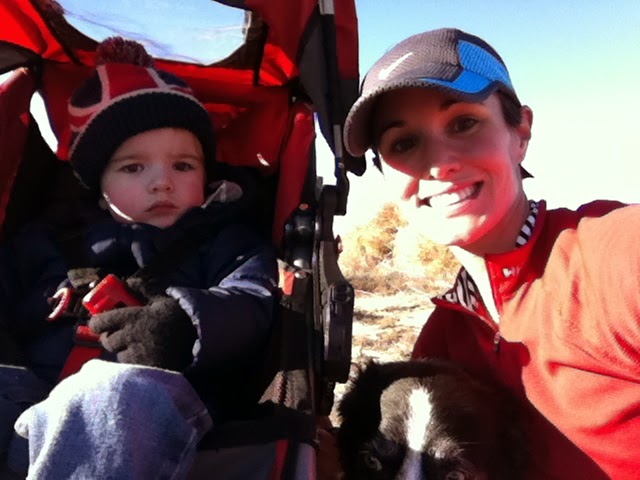
My beloved BOB Revolution. Single handedly the BEST investment we made when Turbo Toby came along. It allows me to run in the company of my small Pocket Rocket, even if he does fall asleep half way through the set!

6.  Muscle Activation & Biomechanics. As the machine is a powered belt, the mechanics of your running gait differ slightly inside to out. Sure, the same muscles are activated whether you are running inside or outside, but ‘how’ they are activated is slightly different. The quadriceps muscles are used to push off both on and off of the treadmill; however, where you would usually rely on your hamstrings to finish the stride and lift your leg behind you, the momentum from the belt will do that for you. With a shorter stride your quads are required to generate the same force to lift you, however without starting in their optimal position.

Another issue is that most treadmills do not have the ability to allow you to run down hill. Downhill running magnifies the load on your quads eccentrically (the muscle lengthens during contraction, rather than shortening), which is the reason people tend to get sore when doing too much downhill run training. However, your body adapts to this stress load by repairing the micro tears in the muscle fibre and strengthening the tendons so that they can withstand that eccentric strain in the future. So, unless your local gym has a ‘spangly futuristic’ downhill treadmill, then adding outside running to your program is a great way to use a variety of gradients to strengthen all of those running muscles!

7.  Challenges. Some people just hate running. Full stop. So whether it’s running outside or inside, a running workout will be a task, physically and/or mentally. However, both settings offer challenges that an athlete has to work through which can have a positive impact on their overall performance and development. On the treadmill, boredom is a huge factor, no matter what, there is giant set of numbers showing the count down; nothing that a towel thrown over can’t combat but still, the urge to watch the clock is there. The lack of distraction for me is the worst part, sure you can pop on a DVD, watch 'This Morning’ but it just doesn’t offer the same kind of time-warp that running outside does. However, I’d rather run than not! If I’m training for a race that doesn’t allow music, the treadmill is a great way to work on my mental strength and determination. The lack of a beat to keep me going, just pounding along with my thoughts for company fighting the urge to jump off every 15 minutes…. yes, those sessions I have got far more out of than just the physical improvement.
A particularly testing treadmill set one scorching Nevada afternoon. Be sure to load your machine up with nutrition and fluid!
8.  Equipment Cost. The purchase of just a pair of running shoes and high visibility clothing OR that, plus gym membership OR that, plus the cost of your own machine? It depends on your budget and the amount of time you intend to spend on it. It can be a very high-cost clothes hanger if you are not careful! However, if you find it hard to motivate yourself to go out to the gym, then a machine sitting there, reminding you of what you ‘should’ be doing could be a motivator (again, this may not work if its covered in clothes!). 

9.  Environment. The treadmill offers a constant environment in which to exercise; temperature, humidity and running surface are the same or at least controlled. You do not need to pay attention to traffic, weather or light levels; and, once you are on it, there are very few external factors to interfere with your workout. Some people don’t like running indoors for this exact reason; others like facing the elements day in, day out; each to their own!

10.  Pace Setting & Progress Setting. The treadmill enables the athlete to set a pace and maintain it. This is particularly useful if you don’t want to invest in a fancy watch telling you your pace at every stage. Also, it is helpful to keep you pushing through when your determination/motivation is starting to wane. On the treadmill you have to perform the physical act of pressing the button to slow the pace, whereas outside you may slow due to fatigue without even realizing. Whilst the treadmill offers only a number to reach; the great outdoors offers its own progress markers. For example picking up the pace to reach a certain lamppost by a certain time or upping the pace when you get competitive with another runner (be aware of this though, unnecessary competitiveness is a sure way of a wrecking carefully paced workout as I have failed to learn many a time!)
During IM training I undertook a number of treadmill runs. Either to get a certain pace or train at a certain gradient or to just test myself mentally. I'm glad I did!
Breaking down a workout is also a great way to ensure the entire running session is used effectively and efficiently and also helps prevent logging those ‘junk miles’. Try these workout ideas for session to try on the treadmill. Work them into your weekly run schedule and see how you do; most of my client are surprised by how fast a run session can pass when you are working in 3-5 minute chunks rather than just attempting to run for 45min!

11.  Calorie Burn. The number of calories burnt during a workout is determined by the intensity of your workout. At a set speed, the treadmill is seen to burn less calories due to the fact that
  • Running outside isn’t as straight, flat or unimpeded as a treadmill.
  • Running outside requires forward propulsion, whereas on the treadmill you are essentially running on the spot with no wind resistance.
  • The belt of the treadmill is in a constant rearward motion so in essence assists the runner again, reducing the requirement to drive the body forwards.
Saying that, if you decide to complete a 30 minute hard interval set on a treadmill, pushing yourself hard to stick to pacing, then you will be sure to burn more calories than an unmotivated 45 minutes ‘plod’ outside.

You may have heard the widely quoted rule of thumb for treadmill running suggesting that increasing the gradient of the treadmill by 1% to take into account the lack of wind. This has actually become an oversimplification of a study completed by Andrew Jones, a well-respected British exercise physiologist who completed testing on Paula Radcliffe during her career, (and also pioneered work with beet juice as a performance-enhancer.). He undertook his 1996 treadmill study, in which he tested experienced runners at six paces (9:11, 8:03, 7:09, 6:25, 5:51, and 5:21 minute miles) while they ran on a treadmill that was either flat or inclined by a variety of levels. His research showed that setting the treadmill at a 1% incline made the effort equivalent to outdoor running only to those running 7:09 pace or faster. Let’s be honest though: many of us are slower than that; so there is no need to panic if you decide to complete your session on a flat treadmill.

So there we have it. Running vs the Treadmill. It’s a love-hate relationship between me and the machine, but lets face it, I’d rather get my training in than miss out due to external factors that will prevent me from running at all. Plus I like to ‘test’ myself every now and again to just prove that I can push myself through the boredom. However, there is nothing like running in the great outdoors. Running with the chill on your face on a crisp spring morning interval session or the evening sun and its warm glow to accompany you on a 5 miler after work. 

Now why would I want to run inside all the time when these two training buddies help me push through?!
Your local 5km charity race, half marathon or marathon is never going to be set inside, so why train for it inside? If you are training for an event, sure, use the treadmill; but supplement your training with it rather than it be the focal piece of equipment for the entire time. If you enjoy beginning you gym workout with a quick 30 minutes on the belt, then stick with it and perhaps add the odd weekend run outside for variety. 

Which ever side you fall on with running, outside or inside, try a small change to your workout schedule. You never know, you just might like it!

Happy Training friends!

TF
x


Friday, April 10, 2015

Time for something sweet.......

I felt I needed a sweet treat when sitting writing training programs on Friday evening, so thought I'd experiment and knocked up this little beauty with my NutriBullet! Despite the striking colour, its all natural and fat free! Even my hubby said it was delicious and he is a sweet-treat monster! smile emoticon

This would make a yummy post-run treat! If you need the extra protein after a hard workout, then mix up your normal protein recovery drink with the milk/fluid before adding it to the frozen fruit!

Fruity yumminess all in one bowl and not an ounce of guilt!

The Turbo Fruity Soft Scoop! (makes 2 servings)
2 Chopped Bananas (frozen)
1 Cup Raspberries or Strawberries (frozen)
2 Tbsp Fat Free Greek Yoghurt (optional)
1 Tsp of Natural Vanilla Essence
1 Cup Milk (2% dairy/almond/coconut - your choice!)

Directions


1)  Throw it all in a blender. Whizz together for just 5 seconds. 

2)  Stop and gently shake the blender to ensure all pieces of fruit move back to the bottom. 

3)  Repeat 3-4 times. (It is important not to blend for too long at once, as this is supposed to be a much thicker consistency than a smoothie so you don't want to whizz it down to be too fluid-like.)

4)  Sprinkle with chopped almonds or a couple of pieces of fruit and voila! 

We ate it straight away, but it could also be popped back into the freezer or put into lolly moulds to be enjoyed later (if you can resist!).

Happy Eating! 

TF x

Wednesday, March 25, 2015

Time to try some a little different...?

Interval training combines short, high intensity bursts of speed, with slow, recovery phases, repeated during one exercise session and has been used by athletes for years to build fitness. This type of training works both the aerobic and the anaerobic the high intensity efforts, the anaerobic system uses the energy stored in the muscles (glycogen) for short bursts of activity.

Interval training leads to many physiological changes including an increase in cardiovascular efficiency (the ability of your heart and lungs deliver oxygen to the working muscles) as well as increased tolerance to the build-up of lactic acid as well as providing a high calorie burn workout! These changes result in improved performance, greater speed, and endurance. It can also reduce the risk of injury associated with repetitive overuse which are common in people undertaking endurance training/sport. Intervals will also allow you to increase your training intensity without overtraining or burnout. Adding intervals to a workout routine is also a great way incorporate cross training to an exercise routine so why not try it today with Turbo Fit Personal Training & Coaching’s Intro Session? For beginners, start with 1 reptition of the main set, for those of you who have been running a little while; try 2-3 repetitions of the main sets! 

Go on, you know you want to!!


Happy Training!

TF
x

Saturday, March 14, 2015

Training with a Passenger

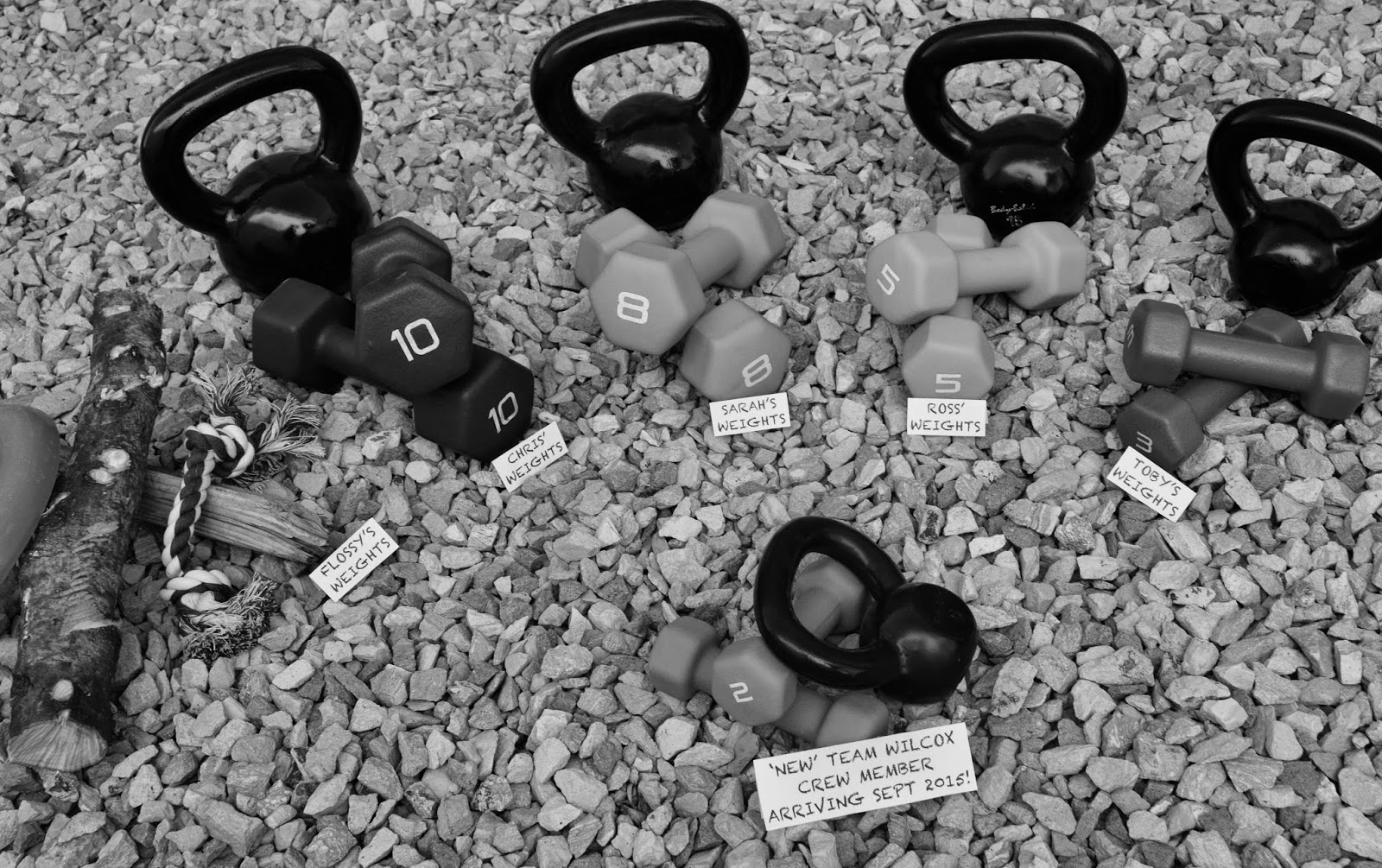
Phew, the job of growing another small Wilcox is a tiring one! However, with much to celebrate as we enter the 13th week of carrying an extra training buddy on board, I sit and reflect on how very different life is from 4 months ago and what is to come….. 

Starting with the good news! The fog of the first trimester is lifting and I’m feeling a little more human again. Time to get back to training – ahem, I mean ‘exercising’.... Whilst pregnant with Toby, life was extremely hectic. I was working full time, completing my Sport & Remedial Massage Certification and of course getting ready to move over the other side of the world which we did when I was 8 months pregnant. This time around my job needs me to keep fit! Yay! I know which option I much prefer! (however staving off the need to vomit whilst trying to teach a spin class has been an ‘interesting challenge’ some days!). Swimming, biking and running continue to be a big part of my life albeit not 18+ hours a week like it was last year. So, ponderings on exercise with a passenger……

Get Moving! ‘Where have you gone?’ A question that I constantly ask to my mutinous abdominals who got the first whiff of pregnancy and scarpered. My butt has felt sorry for me though and expanded to take the extra weight that will be sitting on it for the next 6 months. How very kind of it. I can completely sympathize with women for not always being able to exercise during their pregnancy, but to never workout? That would drive me bonkers. Now, I wouldn’t suggest starting anything ‘new’ such as training for a marathon if you have never run more than a few miles or taking up Crossfit if your version of an 'Olympic bar' is a giant size Snickers treat; but, unless your Doctor or Midwife advises you against working out, you go for it Mama!   Sure, slow down, but don’t just stop exercising completely! Go ahead and stop the intense interval training workouts or at least reduce the intensity of sprints or efforts during classes or go on the elliptical, adopt a saddle on the indoor bike for a few months, walk, swim, take the stairs instead of the elevator. Just keep moving! Unless you are high risk or advised not to, your body needs you to move before, during, and after pregnancy (once your Doctor or Midwife gives you the go ahead, of course). It’s healthy for both mum and the baby, and finding the time to exercise is more important than ever.

Weight Gain: I admit, I felt like a whale with my first pregnancy, extremely self-conscious about the added weight over what seemed like a short period of time. Not a huge difference this time, apart from the tiny detail that I’m going from perhaps the fittest I have ever been (completing IronMan Florida in Nov 14) to gaining 10lb within the space of 2-3 months and reducing training to a couple of runs and teaching my spin classes. It's something that, I have to be honest, I’m finding a bit harder to accept! With my abs notably ‘now on vacation’; my belly has ‘popped’ earlier than the first time but I'm not looking 'pregnant', rather decidedly ‘chubby in the middle’.  Oh well. I’m pregnant, and a baby bump/expansion is part of the deal! I know in my head, however, that this is a temporary thing, and I will get my body back after the next Wilcox Team member installment. Keeping a goal in mind is super important for me. Something that is just for me. That’s why I have decided to complete Ironman 70.3 Oceanside in CA on 28 March 2016. 6 months to train after baby’s appearance. That’s my goal, I’m putting it out there now and I plan to stick to it! No time goal in mind, but watch this space.....

Food, foooooooooood! Anyone who has been or is pregnant can completely relate to need to eat (or rather, devour) something very specific even when not hungry in an attempt to get rid of that sickness feeling. What you do about those cravings is very important though; of course I gave in and have given in a few times but not on a regular basis. My first pregnancy I craved a McDonalds - WTH?? I hadn’t touched a MaccyD’s burger in over 12 years! I had one, on my 30th birthday and it wasn’t worth it so never bothered again. With this bubba it’s all about the protein. You name it: milk, cottage cheese, peanut butter, meat: I’m a vegan’s nightmare meal companion. If it’s an animal product, I’m eating it! (Well, ok with the exception of tripe or internal organs – yuk!) Pasteurised feta cheese and peanut butter – together, is a current firm favourite. Yup! That is feta and peanut butter!??

During pregnancy, it is critical that you provide your body and your baby’s body with the essential nutrients that it needs! The best way you can provide your body with important nutrients is through the healthy food you eat every day. Prenatal vitamins, folic acid are a very important part of making sure you get all the nutrients that you and your baby need during pregnancy, but you shouldn’t look at them as a reason or an excuse to eat junk food all of them time either. I’m having a really hard time stomaching vegetables this time (again a compete 180 from my normal diet) so I’m focusing on adding fruit where and when I can (or adding spinach to smoothies) A little bit of what you fancy does you good though, just keep it in moderation!

Helpful Comments/Advice with Training: ‘Don’t run too much, the baby might become dislodged’. Yep, I had that gem bestowed upon me with my first pregnancy; another cracker being ‘You should absolutely never ever run when pregnant’ (and that was from a midwife who had no idea of my exercise background). Gee thanks, that helps, just pass me that donut and give me an armchair and I’ll be on my way! Mmm, perhaps not. Throughout my first pregnancy I was told repeatedly that having a baby would change me and my training & exercising lifestyle; I’d have less time, I wouldn’t be to leave my little one to go and train and that I would be so intensely tired that I couldn’t possibly exercise to the same level as before. Toby didn’t so much change me but rather ‘how’ I approached training. Sure, I did have less time – much less! Man, I had to be organized and every single session had an increased intensity of focus; different to anything I had felt before. That hour of training was so precious and I have never been so determined in getting the most out each session. More so than ‘BT” (Before Toby)! It took me 8 weeks to be able to leave Toby with a babysitter even for an hour (living in America whilst family were in the UK meant I was tied to training during the few hours my husband was home and baby didn’t need feeding). When Toby was 2 months, Hubby and I went swimming, just for 45 minutes. Toby was in the same building as we were, in fact just through 2 sets of doors but I still cried as I left him and it was possibly the most distracted inefficient swim set I have ever completed! Upon returning to my baby who, I had convinced myself, must be distraught at the fact his mother abandoned him, was in fact sleeping soundly, perfectly content in the warm fuzzy infant world of milk and poop.

Your Birth – Your Way: I learnt with Toby that if I wanted a natural birth, I needed to prepare for it mentally and physically.  I was well aware of the lack of a gold star for giving birth ‘naturally’, but that wasn’t my reason anyway. After some research both my husband and I decided that a birth with minimal interference was our preference for both baby and me. Now, first time round I remember being very aware of people reaction when they asked what my plans were (what is it with people asking those kind of questions anyway??!)  The normal response was ‘yeah, just you wait until the time comes, you’ll soon change your mind’ which was fairly deflating, but I knew I had to give it a try and used swimming really quite effectively to practice methods to help perform my breathing exercises, something that I’ll bring into play again this time. Taking a good lungful of air during the breathe phase of the swim stroke, keeping arm turn over steady for a 3,5,7 count whilst letting my breath out in a slow controlled manner. It really helped with breathing control during birth. Please don’t let others discourage you from having a natural birth if that’s something you want – and seriously plan and prepare for it if you do!

Olympic Marathoner Paula Radcliffe ran throughout her pregnancy
 and was back running 12 day after giving birth!

Forget the Numbers: One thing that is noticeably absent from my training gear, is a GPS or heart rate monitor. I monitor my training by effort, with an emphasis on listening to my body’s needs.  At the end of the day, my body won’t let me do what it doesn’t want to do or can’t do. You just need to remember to control yourself and not put yourself or your baby at risk. Be smart and ignore the ego (something that’s hard to do when you’re running behind someone!). I recommend using your Rate of Perceived Exertion (RPE) and the talk test to guide you. If you’re feeling great, being appropriately challenged, breathing harder but not out of breath, and allowing ample recovery during and between your workouts – bonza!

One Strong Mama: So you need to be strong to support your changing body. To maintain your strength as you carry the extra weight. To help your postpartum recovery process. To prepare yourself and your baby for intense moments of labour and delivery. Your body will be a little unstable and there is a huge amount of hormonal changes taking place, one of which is the major increase of the hormone Relaxin. As the name might suggest, Relaxin promotes the soft tissues (ligaments and tendons) to become more flexible, which is necessary to allow the body to carry baby full term and go through the rigours of labour & delivery. Another reason which was kindly given to me to not lift weights during my first pregnancy. (all this ‘non-exercise’ advice from all quarters and I was starting think that people like to see us pregnant chicks piling on the pounds!)


Anyway, strength training will help to increase stability and a well thought-out, properly planned strength training program will help decrease aches and pain that are common in pregnancy, such as lower and upper back pain, by keeping your posture in more optimal alignment. If you are new to strength training you can totally start in pregnancy; however it is super important to focus on the basics: learn to push, pull, set your shoulders correctly, squat correctly, hinge, and lunge efficiently. Working with a trainer who can teach you solid movement patterns and progress you appropriately is a great way to start. They can help you train in a way, which can help avoid excessive arching through the lower back. A ‘C-curve’ through the lumbar spine is required to position your baby into an optimal alignment for labour and delivery, however, if it becomes too pronounced it can become incredibly uncomfortable during pregnancy and actually thwart the movement of the baby moving down during labour. So I include movements like squatting, glute bridges, swiss ball core exercise and hip thrusts which are excellent for encouraging movement through the pelvis, while helping to increase the stability through the lower back.
The swiss ball was one of the best buys during my first pregnancy!
So there we have it: in a straight-forward uncomplicated pregnancy, the outcomes for both mums and babies are almost always better with exercise.  The research shows that fitter mums have shorter labours, less chance of preterm labor, fewer complications, and shorter hospital stays. The book “Exercising Through Your Pregnancy,” by James Clapp demonstrates study after study proving the case for more strenuous exercise in pregnancy.

Just as my body experienced a plethora of changes as I progressed through my first pregnancy and my training had to be adapted, I’m finding myself on the same journey again. What I have done in the first 12 weeks will be completely different to the second trimester and may not even work in the third.  I may have to lower the intensity further, or decrease the weight, I may have to change to walking (waddling) from my much loved running. That is totally necessary and normal. My focus now is on enjoying my growing self and being a fit, bump-laden triathlete/trainer/mum which will also help ease the transition back into proper training when the time comes! 


Hurrah for training for two!

Happy Training

TF
x


x